How an ice dam forms.
Warm air leaks out of the house into the attic and warms the roof deck from underneath. Snow on the upper roof melts and the water runs down to the eave. The eave hangs out past the warm wall and stays cold, so the water refreezes there. Every melt adds to the ridge of ice, and behind it, water pools and works its way up under the shingles.
Icicles along the gutters are the sign people notice. The damage shows up inside: stains on the ceiling near outside walls, wet insulation, paint peeling under the eaves.
What to do right now.
Deal with the water inside first
Move furniture, put down towels and buckets, and photograph the stains and anything damaged before you clean up. If water is coming in, call or text us: active leaks get triaged same day, not queued behind estimates.
Rake the bottom of the roof
From the ground, pull the snow off the first three to four feet above the gutters with a roof rake. Less snow above the dam means less meltwater feeding it.
Melt a channel
Fill a nylon stocking with calcium chloride ice melt and lay it across the dam so it hangs over the gutter. It melts a path for the water to drain. Skip the rock salt: it's hard on gutters, downspouts and plants.
Call if it keeps coming in
If the leak doesn't stop as the channel drains, or the ice is heavy enough to pull the gutters down, it's time for help.
What not to do
- Don't climb onto a snowy or icy roof. Winter falls are how people get badly hurt.
- Don't chip at the ice with a hammer, axe or shovel. It breaks shingles and gutters.
- Don't use a pressure washer, a heat gun or an open flame on the roof.
How to stop them for good.
Ice dams are a heat problem, not a shingle problem. The fix is keeping the roof deck as cold as the air outside.
Air seal the attic floor
Most of the heat gets into the attic through gaps, not through the insulation: around the attic hatch, light fixtures, plumbing and wiring holes, the chimney and the tops of interior walls. Bath fans should vent outside, never into the attic.
Insulate to today's level
Current code calls for R-60 in new attics in Connecticut's climate zone, far more than most older houses have. Insulation works best once the air leaks are sealed.
Balance the ventilation
Cold outside air comes in low at the soffits and leaves high at the ridge, carrying away the heat that does get through. The usual code rule is 1 square foot of vent for every 300 square feet of attic floor, split between intake and exhaust. A ridge vent with blocked or missing soffit vents doesn't work.
Ice and water shield at the eaves
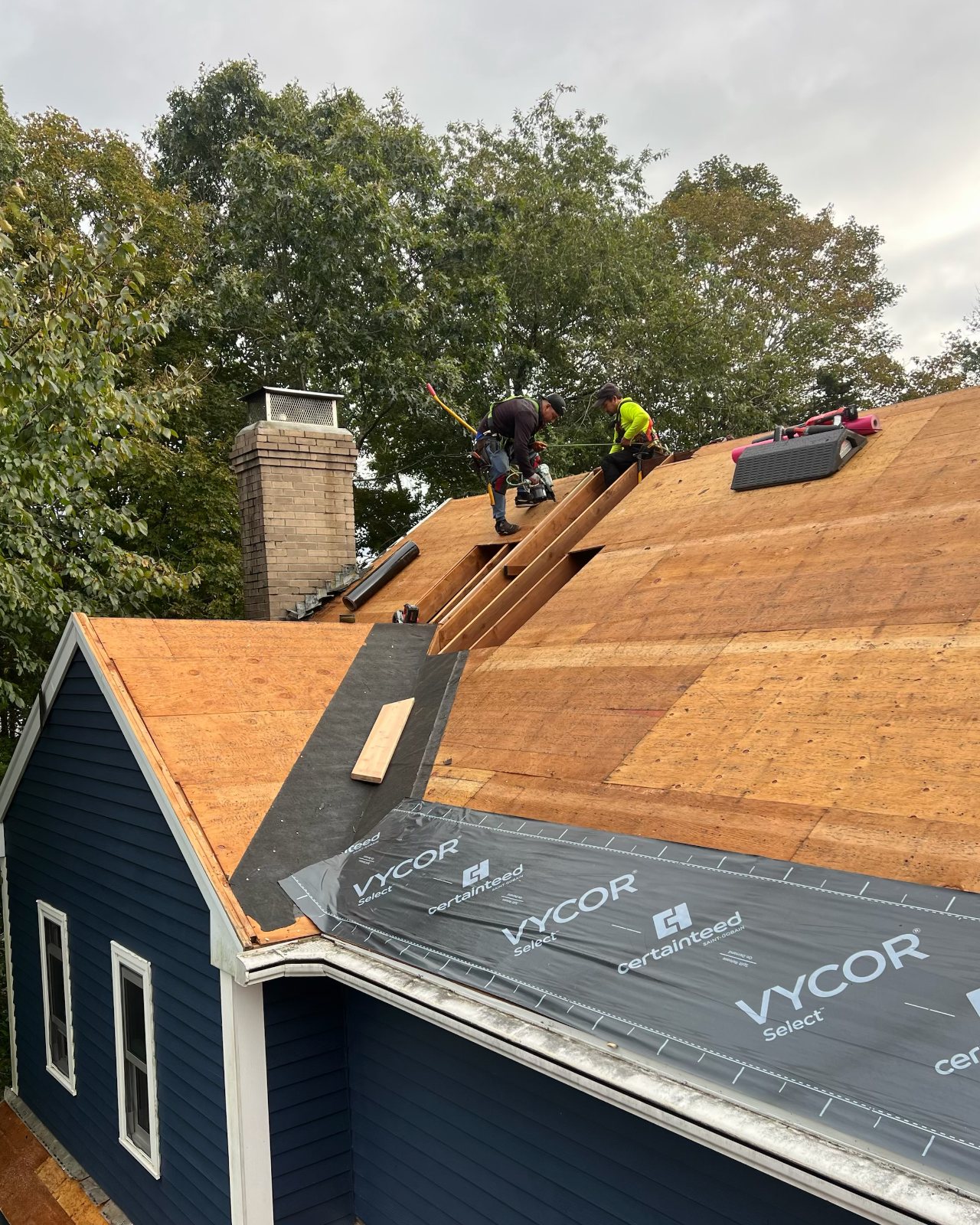
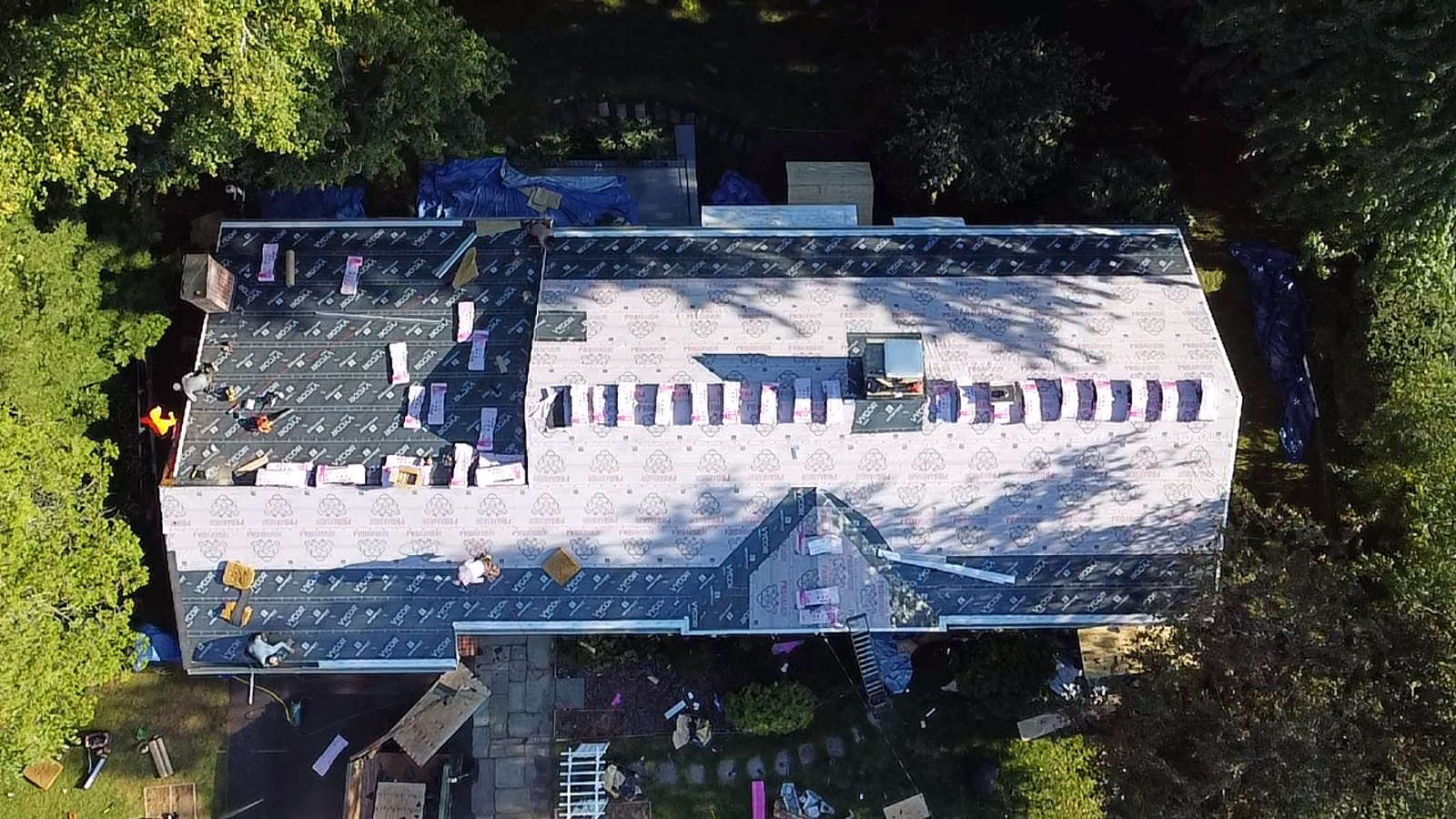
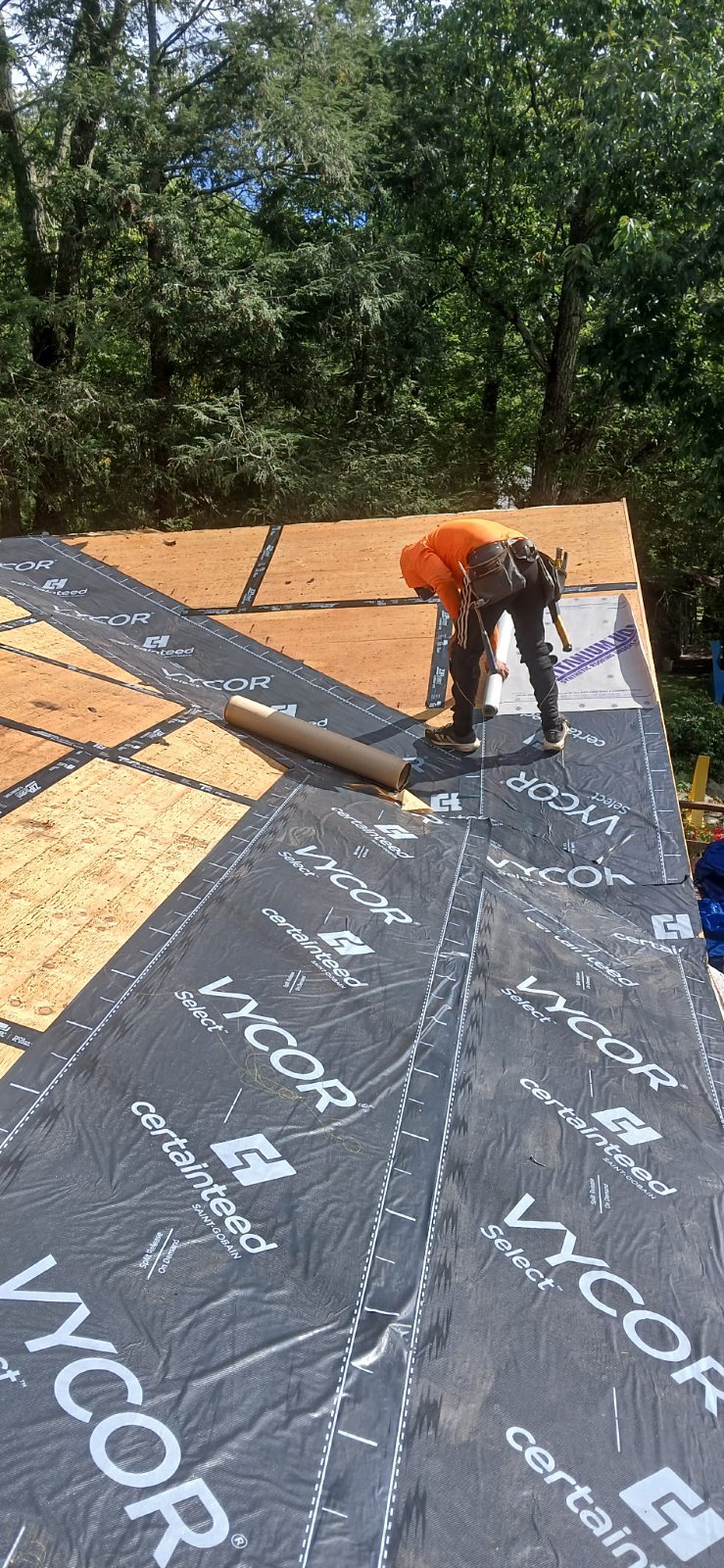
It doesn't stop the dam. It keeps the water that backs up behind one out of the house. Connecticut code requires it, and we run two courses, about six feet, at every eave.
They can keep a channel open over one problem spot, but they use power all winter and treat the symptom. Fix the heat loss first.
What we do about it.
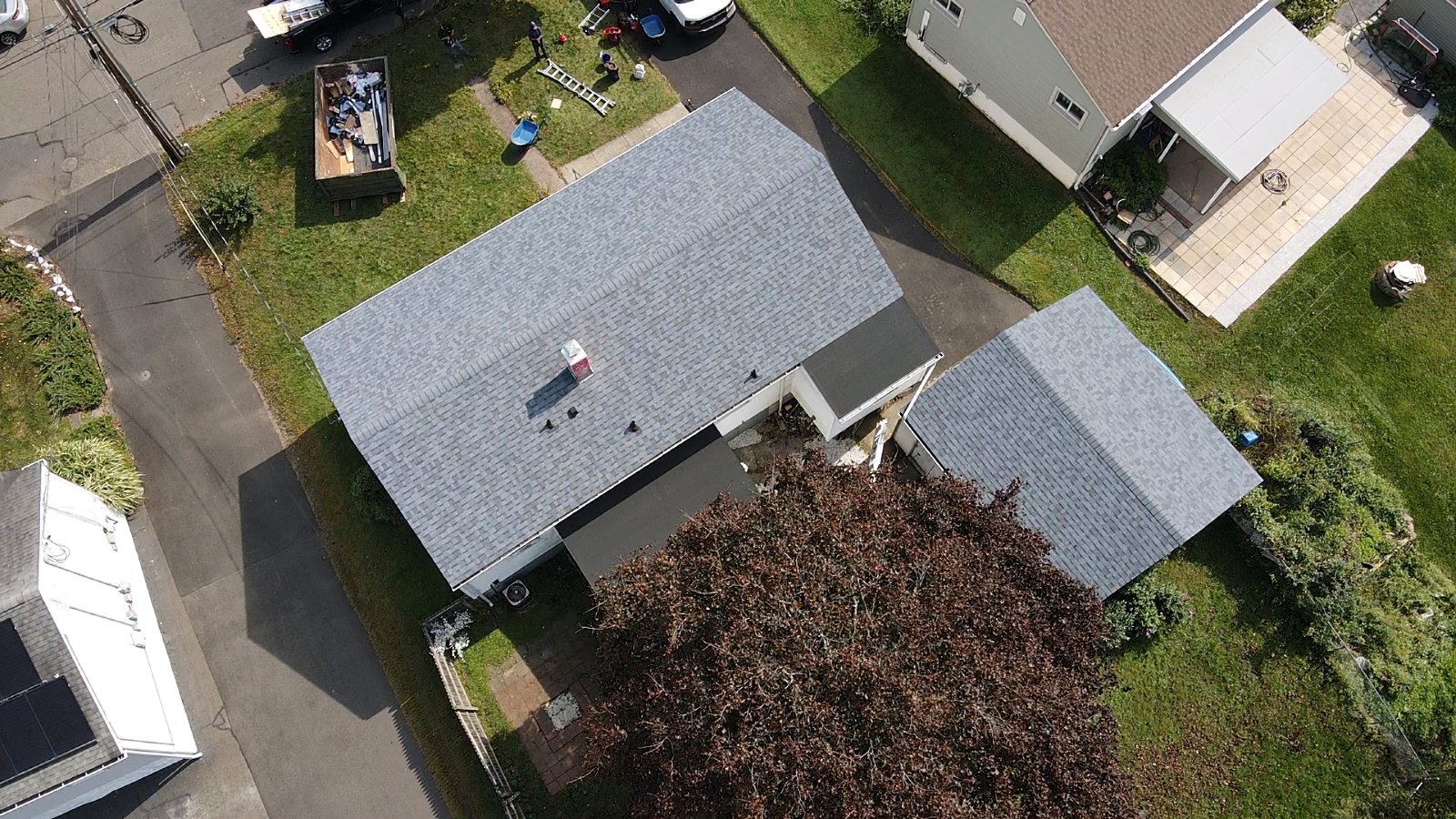
On every roof we replace, we check the intake and exhaust venting and fix what's wrong as part of the quote, and we run ice and water shield two courses up every eave, about six feet. If the real problem is air leaks or thin insulation in the attic, we'll tell you so, rather than sell you a roof to fix a heat leak.
LET’S CLEAR A FEW THINGS UP.
What causes ice dams?
Heat escaping into the attic warms the roof deck and melts the snow on it. The water runs down to the cold eave and refreezes, building a ridge of ice that traps more water behind it.
Should I remove an ice dam myself?
Rake the snow off the bottom few feet of the roof from the ground and melt a channel with calcium chloride. Don't climb onto the roof or chip at the ice: it's dangerous, and it damages shingles and gutters.
Do gutters cause ice dams?
No. Ice dams form on the roof because of heat from the attic. Clogged gutters can fill with ice and add weight, but the fix is in the attic.
Will a new roof stop ice dams?
Not by itself. A new roof with ice and water shield keeps ice dam water out, and fixing the ventilation helps, but if heat is leaking into the attic the dams will still form.
Is ice dam damage covered by insurance?
It depends on your policy. Photograph the damage before you clean up, then call your insurer and ask.