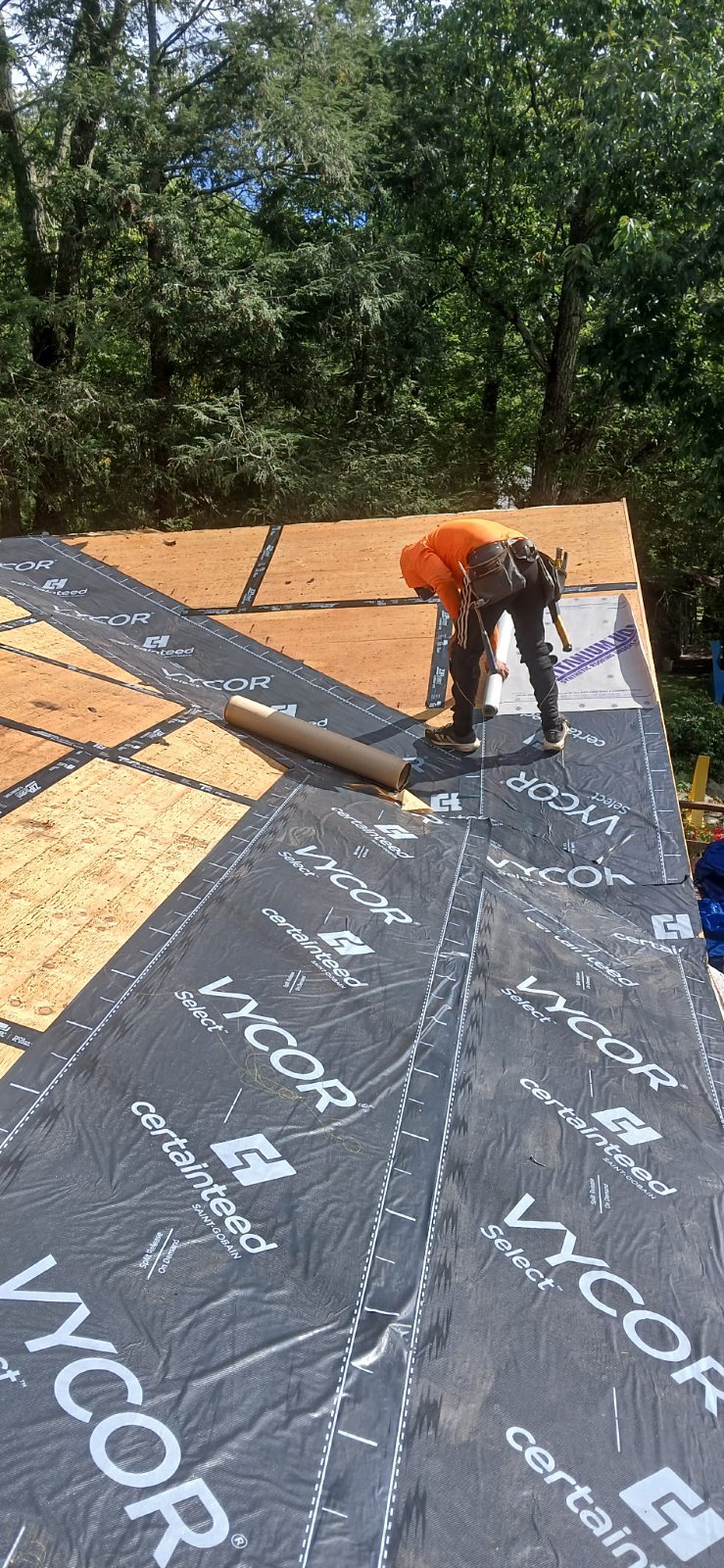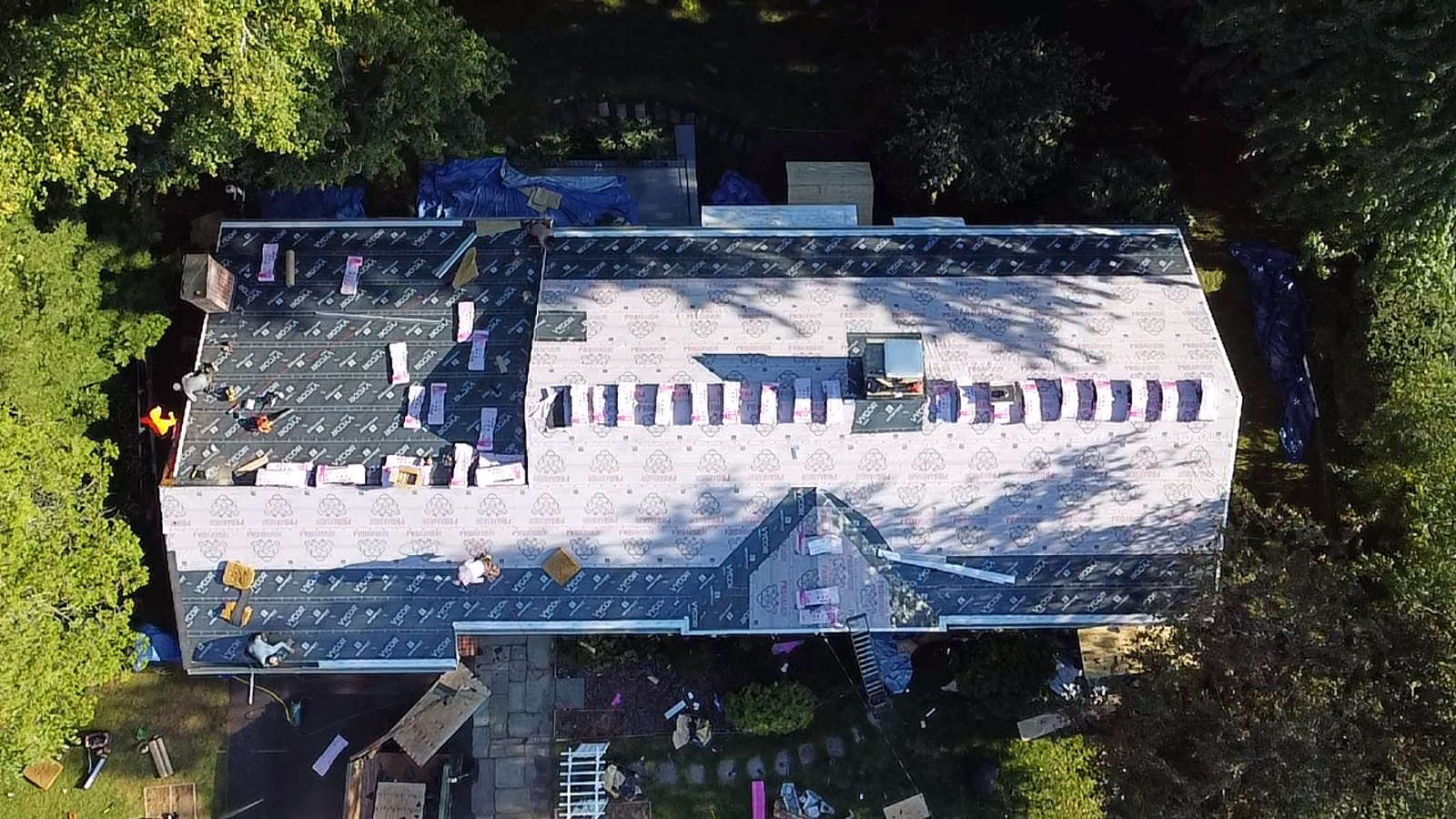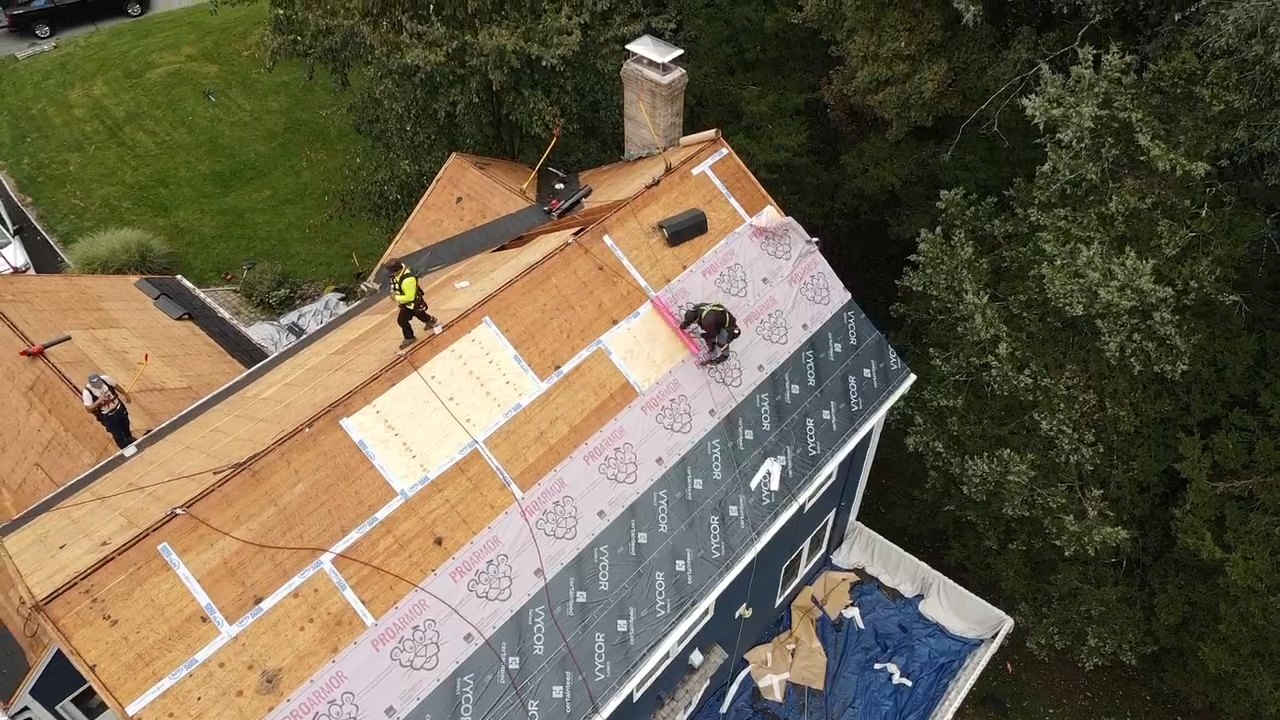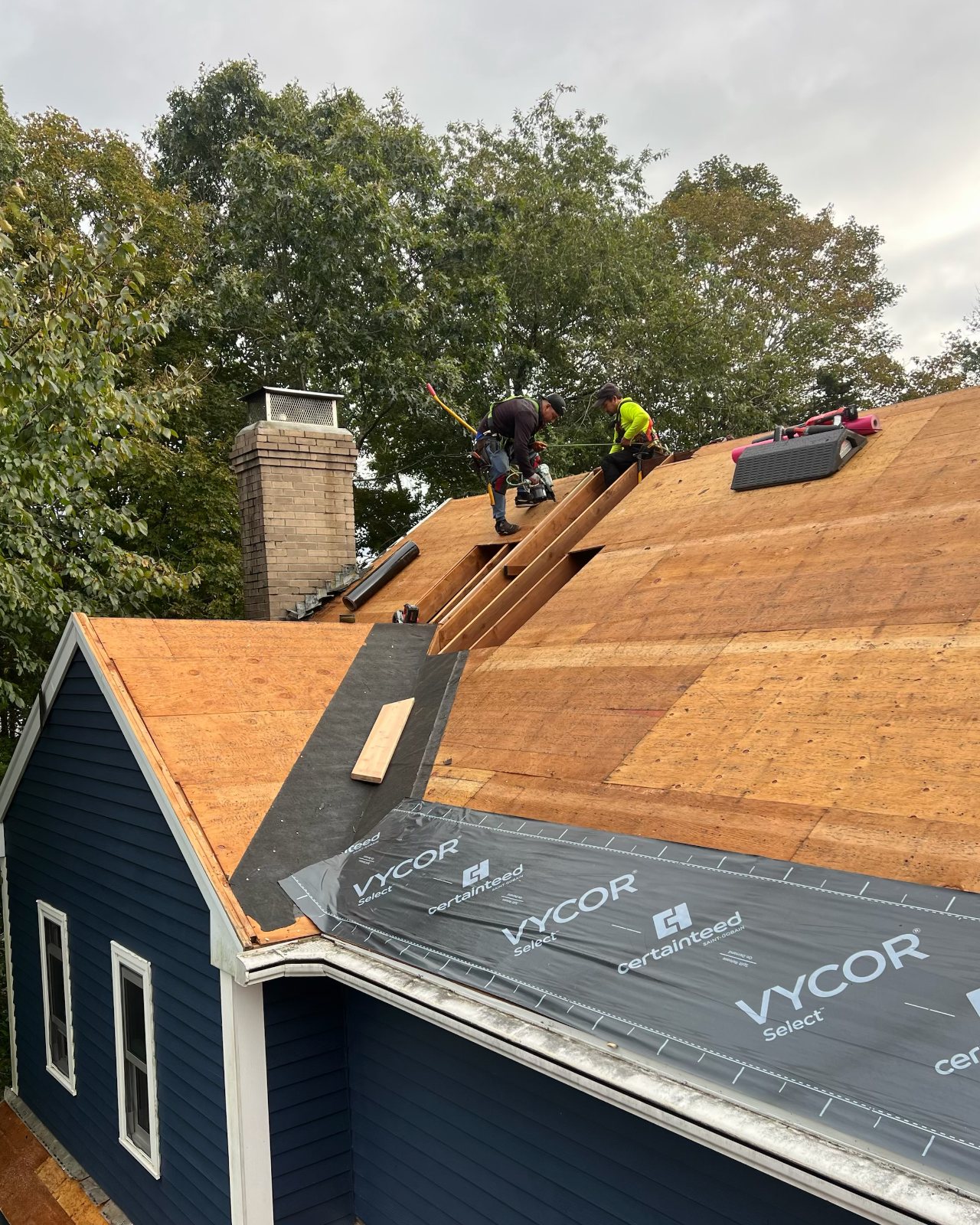
What it is.
Ice and water shield is a self-adhering membrane: rubberized asphalt on a peel-off backing that bonds straight to the roof deck. It does the one thing regular underlayment can't. It seals around every nail driven through it, so water sitting on the roof can't follow the nails in.
That matters most at the eaves. When an ice dam forms, meltwater pools behind it and backs up under the shingles. Shingles shed water running downhill. They don't stop water that's standing still or creeping uphill.
The code calls it an ice barrier. You'll also hear peel-and-stick, ice and water membrane, or a brand name. Same idea.
What Connecticut code requires.
Connecticut's residential code, the 2022 State Building Code (based on the 2021 International Residential Code), marks the whole state as an area where an ice barrier is required. Section R905.1.2 says where it goes:
That 24 inches is measured inside the wall of the house, not from the edge of the roof. The overhang comes first. On a house with a 16-inch overhang, the membrane has to cover the overhang and then reach 24 inches past the wall, and further along a steep slope. A single 36-inch roll often doesn't make it.
Connecticut also amended the underlayment section, R905.1.1: a 4-inch strip of the same membrane goes over every seam in the decking, with underlayment over the whole roof on top. Board decking (lumber less than 3 feet wide, common on older Connecticut houses) is exempt, and covering the whole roof in membrane satisfies the rule.
How far we run it.
Code is the minimum, and on most houses the minimum is cutting it close. Ice dams don't stop at 24 inches inside the wall. On every roof we replace:
- Two courses at every eave, about six feet up the roof
- Every valley, where two slopes send their water down one line
- Around chimneys, skylights, and plumbing and vent pipes
- The whole surface of low-slope sections, like shed dormers and porch roofs
- Synthetic underlayment over the rest of the deck
Want the whole roof in membrane? We'll do it and price it as its own line. It isn't the right call for every house: a fully sealed deck can't dry upward, so the ventilation under it has to be right. We check intake and exhaust venting on every roof anyway, and the fixes are part of the quote.
What it won't do.
Ice and water shield keeps ice dam water out of the house. It doesn't stop ice dams from forming. Those come from heat leaking into the attic and melting the snow from underneath, and the fix is air sealing, insulation and ventilation. Our ice dam guide covers what to do now and how to stop them.
Check your quote for it.
Every roofing quote in Connecticut should say where the membrane goes and how far. If yours just says "ice and water per code," ask two questions: how many courses at the eaves, and is it in the valleys and around the chimney?
On an insurance claim, code-required items like the ice barrier and drip edge belong on the scope too. When an adjuster's first scope leaves them out, they go in the supplement we write. More on storm claims.
- 2022 Connecticut State Building Code, 2021 IRC portion, Chapter 9: Roof assemblies
- 2022 Connecticut State Building Code, Chapter 3: Table R301.2 (ice barrier underlayment required)
Code references are general information, checked November 2, 2026. Your town's building department has the final word on your house.
LET’S CLEAR A FEW THINGS UP.
Is ice and water shield required in Connecticut?
Yes. Connecticut's building code requires an ice barrier along the eaves statewide, from the lowest edge of the roof to at least 24 inches inside the exterior wall line. Detached buildings with no heated space are exempt.
How far up the roof does ice and water shield go?
The code minimum is 24 inches inside the exterior wall, measured from the wall, not the roof edge, so the overhang and a steep pitch push it further up the slope. We run two courses at every eave, about six feet.
Should I put ice and water shield on the whole roof?
It's an option, priced as its own line. It makes sense on low-slope sections and some complicated roofs. On a full roof the deck can't dry upward, so the attic ventilation has to be right first.
Is ice and water shield the same as underlayment?
No. Underlayment covers the whole deck under the shingles. Ice and water shield is a self-sealing membrane used where water is most likely to back up: the eaves, valleys, and around chimneys, skylights and pipes.
Does ice and water shield stop ice dams?
No. It keeps the water an ice dam backs up from getting into the house. Stopping the dams themselves takes air sealing, insulation and balanced attic ventilation.